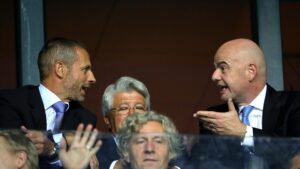
European football has thrown down a historic gauntlet. All 55 UEFA member associations have agreed to boycott future men’s and women’s World Cups, protesting FIFA president Gianni Infantino’s controversial private investment plans. The decision emerged from an emergency virtual meeting Thursday afternoon.
Why Europe Drew A Hard Line
Tension had been building since Tuesday, when Infantino unveiled his proposal publicly. The plan involves creating a new entity called FIFA Forward Enterprise, designed to sell stakes to private investors and raise as much as $20 billion in outside capital. Unsurprisingly, reaction across European football turned hostile almost instantly.
UEFA wasted little time responding. Following the meeting, its 55 members approved the boycott unanimously, calling Infantino’s approach irresponsible for bypassing consultation with member federations entirely. That anger clearly ran deep across the continent.
The vote itself carried real weight, too. Reports confirm the decision passed 55-0, marking the first time any confederation has taken such drastic action against a FIFA tournament. Consequently, several major nations now find themselves on a collision course with football’s global governing body.
What This Means For Football’s Future
Practically speaking, the implications are staggering. Should the boycott hold, reigning champions Spain, alongside semifinalists France and England, would sit out the 2030 World Cup entirely. Six of the world’s current top ten ranked teams come from Europe, making any tournament without them significantly diminished.
Beyond national teams, domestic football has rallied behind the stance too. Notably, the Premier League publicly backed UEFA’s position, confirming its full support for the statement. That alignment adds serious institutional weight behind Europe’s resistance.
FIFA, meanwhile, insists nothing fundamental will change for supporters. Infantino previously reassured fans that the sport they love would remain unaffected, describing his proposal as an opportunity rather than an obligation. Whether that reassurance calms tensions remains doubtful, however.
Ultimately, football now faces genuine uncertainty heading toward 2030. Follow every twist of this unfolding standoff at KCPredict, while further detail is available through ESPN.