


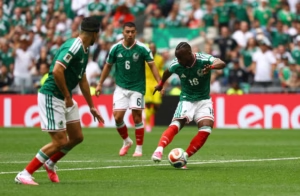
El Tri Delivers on Home Soil
The 2026 FIFA World Cup came to life Thursday afternoon in Mexico City. Estadio Azteca provided the stage. El Tri provided the performance. Over 80,000 fans watched Mexico dismantle South Africa 2-0 in a tournament opener that will ring through football history for years to come.
Julián Quiñones struck in the ninth minute. Raúl Jiménez doubled the advantage in the 67th. The scoreline tells a simple story. Yet everything else about this match screamed complexity, chaos, and theater. Three red cards were shown across ninety minutes. Two to South Africa. One to Mexico. This marked the first World Cup opening game ever to see three sendings off.
Mexico controlled possession at 60%. South Africa managed just 0.07 expected goals. Bafana Bafana rarely threatened. They competed hard anyway. Manager Javier Aguirre’s men executed a display of home advantage, applying high pressure early and suppressing opponents in transition. The Azteca itself became a weapon, its noise level preventing South Africa from any meaningful rhythm or organization.
Meanwhile, the venue itself made history. Estadio Azteca became the first stadium globally to host matches at three separate men’s World Cups. Previous editions in 1970 and 1986 now have company. And what a way to mark that milestone. The walls literally quaked when Quiñones found the net. The cauldron blazed into pure madness.
Quiñones Writes His Name Into World Cup Folklore
Nine minutes. That’s all Mexico needed. Sphephelo Sithole’s mistake near his own penalty area cost South Africa dearly. He lost possession. Quiñones pounced. The Colombian-born winger slotted past goalkeeper Ronwen Williams with perfect accuracy.
The significance reached beyond the scoreline. Quiñones received criticism when committing to Mexico in 2023. Detractors questioned his eligibility. Others doubted his loyalty. None of that mattered anymore. He had just scored the opening goal of the entire tournament. The Azteca recognized his importance immediately, lifting him onto their collective shoulders with deafening applause.
Mexico pressed for a second goal before halftime. Quiñones hit the post. Close. So close. Raúl Jiménez tested Williams with a powerful header early on. The goalkeeper produced a diving save worthy of the World Cup stage. Yet it proved inevitable. Mexico would score again. The question wasn’t whether but when.
Jiménez’s Redemption Moment Moves a Nation
The second half brought South Africa’s first dismissal. Sphephelo Sithole received a straight red card for denying Quiñones a clear goalscoring opportunity. Ten men. The mountain grew steeper. South Africa battled on regardless, but their fate seemed sealed.
Enter Raúl Jiménez. Roberto Alvarado swung a cross toward the far post. Jiménez rose above the defence and headed the ball into the net with authority. Mexico 2-0. The veteran striker dropped to his knees. Tears rolled down his face. The Azteca rose as one.
This wasn’t merely another goal. Jiménez nearly lost everything in 2020 when a catastrophic head injury threatened his career. Six years of rehabilitation, doubt, and steadfastness followed. Now 35 years old and playing at a World Cup on home soil, he had scored his first-ever tournament goal. Football granted him redemption. He seized it completely.
Madness and Red Cards Define the Finale
Chaos broke out in the closing stages. Themba Zwane received a second red card for South Africa. Bafana Bafana played with nine men. Mexico should have coasted. Instead, César Montes lunged recklessly at Khuliso Mudau and received a straight red himself. Denying an obvious goalscoring opportunity. Mexico finished with ten.
The whistle brought jubilation for El Tri. South Africa departs with lessons learned but dignity intact. They didn’t collapse. They never surrendered. Yet Mexico proved too sharp, too organized, too motivated.
Group A now favors the hosts. Mexico travels next to face South Korea in Guadalajara on June 18. They carry momentum. They carry belief. Most importantly, they carry the roar of the Azteca still ringing in their ears.
The 2026 World Cup is alive. And Mexico owns the opening chapter.