

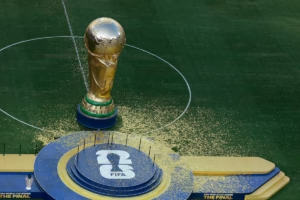
A Record-Breaking Stage for the Sport
The 2026 World Cup wrapped up across the United States, Canada, and Mexico, leaving behind a footprint that stretches well beyond the final whistle. First, viewership shattered every previous benchmark. Nearly 63 million Americans tuned in across Fox, Peacock, and Telemundo for the final, making it the most-watched soccer telecast in American history. That kind of exposure doesn’t fade quickly.
Second, expansion actually delivered. FIFA’s controversial jump from 32 to 48 teams drew criticism beforehand, yet nations like Cape Verde and DR Congo turned that gamble into some of the tournament’s best stories. Their runs proved the wider net can genuinely reshape football’s competitive landscape.
Third, Messi’s farewell tour cemented itself in football folklore. Argentina repeatedly clawed back from difficult positions behind their captain, producing moments that will circulate for decades. Few players define a tournament quite like he did this summer.
Fourth, American soccer gained real momentum. Packed stadiums and unprecedented ratings are expected to boost MLS visibility significantly, with the league already launching fresh marketing efforts to capture new fans. Youth participation looks set to rise too, as children who watched the tournament sign up for their first teams.
Legacy Questions Remain for Host Cities
Fifth, and more complicated, is the question of lasting social impact. Host cities invested heavily in infrastructure and community programs before kickoff, yet sustaining that momentum afterward remains uncertain. Many legacy initiatives were built around the tournament itself, without clear plans extending into the years ahead.
That gap concerns urban planners and sports economists alike. Without dedicated organizations continuing the work, city and regional sports commissions may need to step in, coordinating existing community groups to preserve whatever social benefits the tournament generated.
Culturally, though, few dispute the World Cup’s broader reach. Fashion, music, and even political unity found unexpected expression through the event, turning kits and fan festivals into genuine cultural touchstones. Whether that translates into structural change for American soccer specifically remains football’s next great debate.
For continued analysis on football’s biggest stories, visit the KCPredict blog. Further reporting on the tournament’s legacy is available via Yahoo Sports.