


Introduction
Football match analysis has changed significantly with the growth of data, statistics, and digital technology. In the past, fans and analysts mainly relied on final scores, league positions, and personal observations to understand team performance. Today, a much wider range of information is available. Team form, player statistics, scoring records, defensive numbers, possession, passing, shots, expected goals, and recent performances can all contribute to a deeper understanding of a football match.
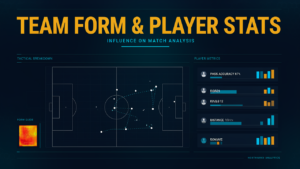
Team form provides information about how a club has performed recently, while player statistics help explain the individual contributions behind those results. When these two areas are considered together, they can provide useful context for understanding the strengths and weaknesses of competing teams.
Digital platforms have also made football information easier to access. Services such as 91 CLUB exist within a broader digital environment where users increasingly interact with sports content, entertainment, and statistical information online.
Understanding Team Form
Team form usually refers to a club’s recent results and performances. Analysts may examine the number of wins, draws, and losses recorded over a certain number of matches. They may also consider goals scored, goals conceded, clean sheets, possession, and other performance indicators.
Recent form can provide a snapshot of a team’s current situation. A team that has achieved several positive results may have developed greater consistency, while a team experiencing repeated defeats may be dealing with tactical, defensive, or attacking problems.
However, form should not be interpreted as a simple guarantee of future performance. Football matches are influenced by many variables, including opponent quality, injuries, home advantage, tactical changes, and unexpected events.
Why Recent Results Matter
Recent results are useful because football teams can change considerably during a season. A club may improve after a new manager introduces a different tactical system, or performance may decline after important players become unavailable.
Looking at recent matches can help analysts identify whether a team is maintaining a particular pattern. For example, a team might be scoring consistently but conceding frequently. Another club might have a strong defensive record while struggling to create attacking opportunities.
Instead of looking only at whether a team won or lost, analysts can examine how those results were achieved. This creates a more complete picture of current form.
Goals Scored and Goals Conceded
Goals are among the most important statistics in football analysis. Examining goals scored can provide information about attacking efficiency, while goals conceded can reveal defensive tendencies.
A team with a high scoring rate may have several attacking strengths, such as effective finishing, strong movement, creative midfielders, or dangerous set pieces. A team conceding many goals may struggle with defensive organization, transitions, or protecting its penalty area.
Comparing both statistics is particularly useful. A club that scores frequently but also concedes regularly may play an open style of football. Another club may score fewer goals but maintain a strong defensive structure.
The Importance of Home and Away Form
Team form can also change depending on where a match is played. Home and away records can provide additional information for match analysis.
Some teams perform strongly in front of their home supporters, while their results may be less consistent away from home. Analysts can compare home and away goals, wins, losses, draws, and defensive records.
The difference may be connected to tactical choices, familiarity with the stadium, crowd support, travel, or the approach taken by opponents. Nevertheless, home and away statistics should always be interpreted alongside other information rather than treated as a single determining factor.
Player Statistics and Individual Performance
Team performance is influenced by individual players, making player statistics an important part of football analysis. Modern football provides numerous ways to measure individual contributions.
For attackers, statistics can include goals, assists, shots, shots on target, expected goals, key passes, and successful dribbles. Midfielders can be evaluated through passing, chances created, ball recoveries, tackles, progressive passes, and assists.
Defenders can be assessed through tackles, interceptions, clearances, blocks, aerial duels, and recoveries. Goalkeepers have different performance indicators, including saves, goals conceded, distribution, and clean sheets.
These statistics can help analysts understand contributions that may not be obvious from the final score.
Goals and Assists
Goals and assists remain two of the most recognizable player statistics. A forward who regularly scores can have a significant influence on a team’s attacking output, while a creative player may contribute through assists and chances created.
However, goals and assists should not be viewed in isolation. A player may have few goals but contribute through movement, pressing, passing, or creating space for teammates.
Similarly, an assist does not always tell the full story of an attacking move. A player may make an important pass several stages before a goal is scored. This is why modern analysis uses broader statistical categories to understand player influence.
Passing and Ball Progression
Passing statistics provide insight into how players help move the ball around the pitch. Analysts can examine passing accuracy, progressive passes, passes into the final third, key passes, and other distribution measures.
A midfielder who consistently moves the ball forward can help a team transition from defense to attack. A defender with strong passing ability may help a team build attacks from the back.
At the same time, high passing accuracy does not automatically indicate excellent performance. A player making mostly short, safe passes may achieve a high completion rate, while another player attempting difficult forward passes may have a lower percentage.
Context is therefore essential when interpreting passing statistics.
Defensive Player Statistics
Defensive statistics help explain how teams prevent opponents from creating opportunities. Tackles, interceptions, blocks, clearances, recoveries, and defensive duels are commonly examined.
A defender who records many interceptions may be effective at reading passing lanes. Another player may make fewer tackles because their positioning prevents opponents from reaching dangerous areas.
This shows why statistics need to be interpreted alongside tactical roles. A player’s numbers can be influenced by the team’s formation, possession level, defensive strategy, and responsibilities.
Expected Goals and Chance Creation
Expected goals, or xG, have become increasingly popular in modern football analysis. The metric estimates the quality of scoring opportunities based on characteristics associated with each shot.
Team-level xG can help analysts examine whether a side is regularly creating strong opportunities. Player-level xG can provide additional context about attacking chances.
For example, two forwards might each score the same number of goals, but one may have produced those goals from fewer and higher-quality opportunities. Another player may take many low-probability shots.
Expected goals therefore provides another layer of information beyond traditional goal statistics.
Player Availability and Squad Depth
Statistics become especially relevant when important players are unavailable. Injuries, suspensions, rotation, and fatigue can influence team performance.
If a club loses a leading scorer, analysts may examine how the team performs without that player. Similarly, the absence of a key defender or midfielder can affect defensive organization or ball progression.
Squad depth also matters. A team with several players capable of performing similar roles may adapt more easily to absences than a squad heavily dependent on a small number of individuals.
Digital football analysis can bring these factors together, helping users understand how changes in the squad may affect overall team performance.
Combining Team and Player Data
The greatest value often comes from combining team statistics with player statistics. Looking at only one category can provide an incomplete picture.
For example, a team’s recent scoring decline may be connected to the absence of a key creative midfielder. A defensive improvement may coincide with the return of an experienced center-back. A change in possession may be related to a new midfield formation.
By connecting individual and team data, analysts can identify relationships between player performances and broader tactical patterns.
The Role of Digital Platforms
Football information has become increasingly accessible through websites, mobile applications, and online entertainment platforms. Users can review team records, player statistics, match information, and performance trends from almost anywhere.
Platforms such as 91 CLUB fit into this broader digital landscape by providing an environment where users engage with online content and entertainment. The wider availability of sports information means that football fans can explore statistical details while following matches and discussing performances.
This accessibility has also encouraged more data-driven conversations among supporters.
Limitations of Form and Statistics
Although team form and player statistics are useful, they do not provide a complete explanation of a football match. A team’s recent results may have come against unusually strong or weak opponents. A player’s statistics may also be affected by their tactical role.
Other factors include weather, injuries, fatigue, referee decisions, tactical changes, motivation, and unexpected moments during a match.
Statistics should therefore be treated as evidence that supports analysis rather than as a perfect method of explaining or predicting football.
The Future of Football Analysis
Technology is likely to make football analysis even more detailed. Artificial intelligence, player tracking, automated video analysis, and real-time data collection can provide increasingly precise information about team and player behavior.
Future systems may examine positioning, movement, pressing, passing networks, and tactical changes in greater detail. Fans may also receive more personalized statistics based on their favorite teams and players.
As these technologies develop, the challenge will be to make complex information understandable. The most useful systems will not simply provide more numbers; they will help users understand what those numbers mean.
Conclusion
Team form and player statistics play an important role in modern football match analysis. Recent results can reveal current trends, while goals, defensive records, possession, and chance creation provide additional context. Player statistics can then explain individual contributions through goals, assists, passing, defensive actions, and other measurable performances.
The strongest analysis combines these different categories rather than depending on one statistic. Data can identify patterns, but football remains a complex sport influenced by tactics, teamwork, individual decisions, and unpredictable events.
As digital platforms continue to make football information more accessible, services and environments such as 91 CLUB LOGIN reflect the growing connection between sports, technology, and online entertainment. For modern football audiences, statistics offer a valuable way to explore the game more deeply while keeping human interpretation at the center of the analysis.