

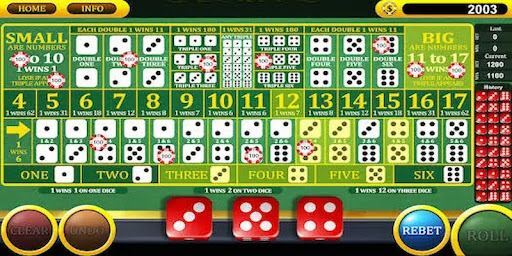
Navigating the vibrant landscape of online entertainment platforms often leads enthusiasts to discover classic table games reimagined for modern digital environments. Among these offerings, tai xiu Rikvip stands out as a prominent dice-based attraction that draws significant daily participation. Understanding the underlying mechanics, probability distributions, and structural rules of this game transforms a casual pastime into an engaging analytical experience. Whether you are encountering this title for the first time or seeking to refine your approach, a thorough comprehension of how the system operates provides a solid foundation for every session.
The mechanics of dice wagering games date back centuries, evolving from traditional street games into sophisticated digital formats found on platforms like Rikvip. Modern implementations rely on certified random number generators or transparent physical rolling setups to ensure fair outcomes. By examining the fundamental structure of tai xiu Rikvip, participants can navigate the digital interface with confidence, manage their bankrolls effectively, and appreciate the nuanced interplay between risk and reward that defines each roll of the three dice.
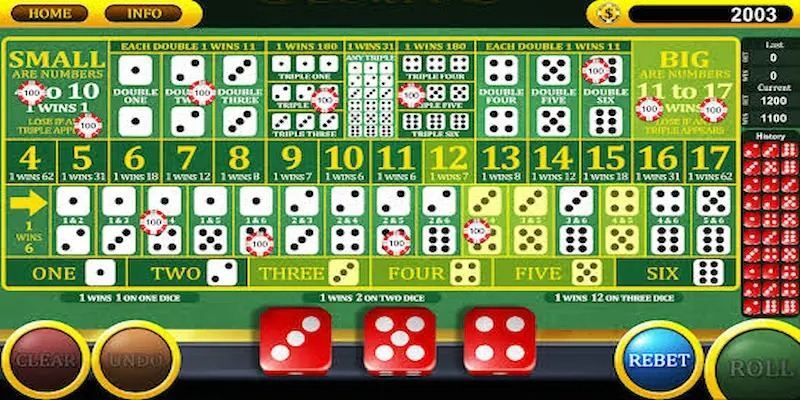
Digital interface displaying the active betting board and rolling area for tai xiu Rikvip
Core Mechanics and Basic Rules of Tai Xiu Rikvip
Before placing any wagers, grasping the fundamental operational rules of tai xiu Rikvip is essential for any participant. The game centers around the outcome of three standard six-sided dice, which are rolled simultaneously to produce a total sum ranging from 3 to 18. The primary objective for participants is to predict the characteristics of this combined sum or specific combinations before the virtual timer expires and the dice settle.
The simplicity of the primary wagering choices makes the game accessible to newcomers, while the presence of advanced secondary options maintains engagement for seasoned strategists. Every round follows a strict temporal sequence: the betting window opens, participants allocate their stakes across various available positions on the digital board, the betting window closes, the dice are revealed, and winning accounts are credited automatically according to predetermined payout multipliers.
Understanding the Big and Small Wagers
The cornerstone of tai xiu Rikvip centers on the binary propositions known as Tai (Big) and Xiu (Small). A "Small" (Xiu) outcome corresponds to a total dice sum between 4 and 10, whereas a "Big" (Tai) outcome represents a total sum between 11 and 17. It is vital to note that a total sum of 3 or 18 (commonly known as a triple or "three of a kind") typically results in the loss of both Big and Small wagers in standard configurations, representing the house edge built into the core game structure.
These binary options attract the majority of participants because they offer nearly even-money payouts, typically set at 1:1. Because the probability of rolling a sum between 4 and 10 closely mirrors the probability of rolling a sum between 11 and 17, these wagers provide a balanced volatility profile. Participants examining historical result charts often look for perceived streaks, though each roll remains an independent statistical event governed by mathematical laws rather than previous outcomes.
Exploring Specific Number Sums and Totals
Beyond the broad categories of Big and Small, tai xiu Rikvip permits participants to wager on exact total sums ranging from 4 to 17. Each specific sum carries a distinct payout ratio that inversely reflects its mathematical probability of occurrence. For instance, rolling a total sum of 4 or 17 is statistically rare, requiring all three dice to land on specific restrictive combinations (such as 1-1-2 for a sum of 4). Consequently, these low-probability exact sums offer significantly higher payout multipliers, sometimes exceeding 50:1 depending on the exact platform table rules.
Wagering on specific totals requires a shift in analytical perspective, moving away from low-variance bankroll preservation toward high-variance tactical placement. Participants who choose this path must accept lower success frequencies in exchange for substantially elevated returns when their chosen sum materializes. Balancing exact sum wagers with foundational Big or Small positions represents a common method for diversifying risk within a single round.

Close-up of the exact number sum payout table displayed within the Rikvip interface
Decoding Combination and Triple Wagers
Among the most complex and rewarding options in tai xiu Rikvip are combination wagers and specific triple bets. A combination wager involves predicting that at least two specific numbers will appear among the three rolled dice, such as a 3 and a 4 appearing simultaneously. Meanwhile, a specific triple requires a participant to correctly predict that all three dice will land on the exact same digit—for example, three fours or three sixes.
Because landing a specific triple is an infrequent occurrence, the payout multipliers associated with these outcomes are exceptionally generous. Furthermore, the game often features an "any triple" wager, which wins if any three-of-a-kind combination appears, regardless of the specific digit. Analyzing the frequency of these rare events helps participants calibrate their exposure to high-risk, high-reward propositions without depleting their capital reserves prematurely.
Probability, Mathematics, and House Edge in Tai Xiu Rikvip
A comprehensive understanding of tai xiu Rikvip requires looking past the visual appeal of the digital interface and examining the underlying mathematical reality. With three six-sided dice, there are $6^3$, or 216, possible unique permutations for every single roll. Every available wagering option corresponds to a specific subset of these 216 outcomes, dictating the true mathematical probability and the corresponding payout structure established by the platform developers.
Analyzing these probabilities empowers participants to make rational decisions rather than relying entirely on intuition or emotional responses during losing streaks. Recognizing how the house edge operates across different board positions ensures that participants maintain realistic expectations regarding long-term session outcomes, viewing the activity strictly as a form of calculated entertainment.

Mathematical probability distribution chart for three-dice totals in digital dice games
Calculating Combinatorial Frequencies
To truly master tai xiu Rikvip, one must appreciate how combinatorial math dictates dice sums. For example, a total sum of 10 can be formed in 27 different ways out of the 216 total permutations, while a sum of 3 can only be formed in 1 way (1-1-1). This mathematical skewness means that middle-range sums appear with significantly higher frequency than extreme low or high sums.
Understanding these distribution curves prevents participants from treating all numerical outcomes as equally likely. When placing exact sum wagers, knowing the exact number of winning permutations allows for precise calculation of the expected value for that specific position, separating educated placement from random guessing.
The Role of the House Edge
Every digital table game, including tai xiu Rikvip, incorporates a mathematical advantage known as the house edge to ensure operational sustainability. In this game, the house edge is primarily enforced through the exclusion of standard Big and Small wagers when a triple (all three dice showing the exact same number) is rolled. Because triples occur approximately 2.78% of the time in three-dice mechanics, this rule tilts the statistical balance slightly in favor of the platform.
Acknowledging the presence of the house edge encourages disciplined bankroll management. Because the mathematical odds are marginally stacked against the participant over an extended sample size, treating the game as a short-term recreational pursuit with strict financial boundaries is the most prudent approach to long-term digital engagement.
Dispelling Common Statistical Fallacies
Participants in tai xiu Rikvip frequently fall victim to cognitive biases, most notably the Gambler's Fallacy—the mistaken belief that if a particular event occurs more frequently than normal during a given period, it will happen less frequently in the future, or vice versa. In independent trials like dice rolls, past outcomes have zero influence on future results. If "Small" appears five times in a row, the mathematical probability of "Small" or "Big" appearing on the sixth roll remains exactly identical to the first roll.
Recognizing these psychological pitfalls protects participants from making erratic adjustments to their stake sizes based on perceived "due" outcomes. Maintaining a detached, analytical mindset ensures that decisions remain grounded in probability theory rather than emotional frustration or unwarranted optimism.
Strategic Approaches and Bankroll Management for Tai Xiu Rikvip
Sustained enjoyment of tai xiu Rikvip relies heavily on disciplined session structuring and rigorous financial control. Without a coherent strategy, impulsive decision-making can quickly deplete funds during unfavorable statistical variance. Implementing established bankroll management principles allows participants to weather inevitable losing streaks while maximizing their playtime and engagement quality.
Strategic play is not about discovering a mythical formula that guarantees victory on every roll—since the independent nature of dice precludes such certainty—but rather about optimizing risk exposure, controlling expenditure rates, and maintaining emotional equilibrium throughout the session.
Establishing Strict Financial Limits
The foundation of responsible participation in tai xiu Rikvip is the establishment of a dedicated session budget that the participant is fully prepared to lose without impacting their daily life. Before initiating any session, defining both a maximum loss threshold and a desirable profit target creates essential boundaries. Once either limit is reached, terminating the session immediately prevents the common pitfall of chasing losses.
Dividing the total bankroll into smaller, incremental units—such as allocating no more than 2% to 5% of the total budget to a single round—ensures that a temporary downward variance does not prematurely end the recreational experience. This methodical compartmentalization transforms volatile gameplay into a structured, controlled pastime.
Implementing Progression and Flat Wager Systems
Participants often experiment with various stake allocation systems when playing tai xiu Rikvip. Flat wagering, where the stake remains identical regardless of previous outcomes, offers the highest level of capital preservation and predictability. This approach aligns well with the inherent house edge, minimizing the velocity at which funds are depleted.
Conversely, progressive systems—such as increasing stakes after a loss to recover previous deficits—introduce extreme financial risk. While positive progression systems can capitalize on winning streaks, negative progression models can rapidly exhaust a bankroll if a prolonged sequence of unfavorable rolls occurs. Evaluating one's risk tolerance is essential before adopting any structured allocation framework.
Psychological Discipline and Emotional Control
Maintaining emotional detachment is arguably the most critical skill for anyone engaging with tai xiu Rikvip. The fast-paced digital environment, combined with fluctuating outcomes, can easily provoke frustration, impatience, or reckless euphoria. Recognizing the early warning signs of emotional decision-making—such as placing larger-than-normal stakes to recover losses quickly—is the cue to step away from the interface.
Treating the session as entertainment with an associated cost, much like purchasing a ticket to a movie or a sporting event, shifts the psychological paradigm. When the primary objective is entertainment value rather than financial gain, participants can enjoy the strategic depth and suspense of every roll without unnecessary stress.
To ensure a secure and seamless gaming experience, many enthusiasts prefer engaging with platforms that prioritize transparency and robust system security, which is why exploring options on RIK VIP has become increasingly popular among modern digital table game participants seeking reliable service quality.
Conclusion
Mastering tai xiu Rikvip requires a balanced combination of rule comprehension, mathematical awareness, and strict financial discipline. By understanding the core mechanics of three-dice distribution, recognizing the reality of combinatorial probabilities, and avoiding common psychological fallacies, participants can approach the digital table with clarity and confidence. While the house edge remains an immutable factor in any dice-based game, structured bankroll management and emotional control ensure that the experience remains safe, predictable, and thoroughly entertaining. Ultimately, approaching the platform with an analytical mindset allows every participant to appreciate the timeless appeal of this classic game within its modern digital evolution.